Few things are as frustrating as a pellet smoker that suddenly stops feeding pellets, leaving your brisket stalled and your BBQ dreams on hold. An auger jam is a common culprit, interrupting the steady flow of wood pellets to the firepot and bringing your cooking session to a grinding halt. While it might seem daunting, clearing a jammed auger is often a straightforward DIY task that can save you time, money, and your meal. This comprehensive guide will walk you through the process, from understanding why jams occur to a step-by-step solution, ensuring you can get back to smoking without a hitch.
What is a Pellet Smoker Auger and Why Does It Jam?
The auger is the helical screw mechanism inside your pellet smoker that transports wood pellets from the hopper to the firepot, where they ignite and create smoke and heat. It’s the heart of your smoker’s operation, ensuring a consistent fuel supply to maintain your desired cooking temperature. When the auger jams, this crucial process stops, leading to temperature fluctuations and eventually a cold grill.
Several factors can cause an auger to seize:
- Wet or Damp Pellets: This is the most common cause. Pellets absorb moisture, swell, and turn into a dense “wood concrete” that the auger cannot push through.
- Debris or Foreign Objects: Small pieces of wood, excessive sawdust, or even foreign objects accidentally introduced into the hopper can obstruct the auger’s path.
- Pellet Quality: Lower-quality pellets are more prone to breaking apart, creating fine dust, or containing inconsistencies in size, all of which increase the risk of a jam.
- Lack of Maintenance: Infrequent cleaning allows pellet dust and residue to accumulate, eventually hardening and impeding the auger’s movement.
- Motor Issues: In some cases, the auger motor itself might be failing or experiencing electrical problems, though this is less common than pellet-related jams.
Understanding these causes is the first step toward both resolving current jams and preventing future ones.
Essential Tools for Unjamming Your Auger
Before you begin, gather the following tools. Having them ready will streamline the process:
- Safety Gloves: Protect your hands from sharp edges and debris.
- Phillips Head Screwdriver: For removing various panels and screws.
- Wrench or Socket Set: For loosening nuts and bolts, especially around the auger motor.
- Allen Wrench (Hex Key) Set: Some models use Allen head bolts for the auger or motor.
- Shop Vacuum: Essential for clearing out pellets and dust from the hopper and auger tube.
- Metal Rod or Coat Hanger: To gently probe and dislodge blockages within the auger tube.
- Hammer: May be needed for light tapping to free a stubborn auger.
- Wooden Block or Punch: To tap the auger shaft without causing damage.
- Container or Bucket: To collect removed pellets.
- Wire Brush (Optional): For cleaning the auger shaft if removed.
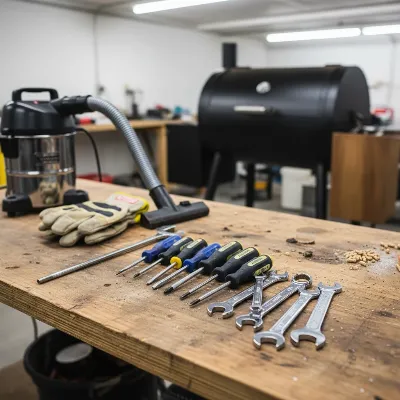 Various tools laid out for clearing a pellet smoker auger jam, including screwdrivers, wrenches, a shop vac, and gloves.
Step-by-Step Guide: How to Unjam Your Pellet Smoker Auger
Follow these steps carefully to safely and effectively clear your pellet smoker’s auger. Patience is key, especially with stubborn jams.
Safety First: Disconnect Power
|
Our Picks for the Best Pellet Smoker in 2026
As an Amazon Associate I earn from qualifying purchases.
|
||
| Num | Product | Action |
|---|---|---|
| 1 | Masterbuilt® 30-inch Digital Electric Vertical BBQ Smoker with Side Wood Chip Loader, Chrome Racks and 710 Cooking Square Inches in Black, Model MB20071117 |

|
| 2 | BBQ Wood Pellet Grill Smoker with Foldable Cart, Meat Probe, 2 Tiers Cooking Area, Portable Grilling Stove for Outdoor Kitchen Cooking Smoke and Roast, RV Camping, Black GS343 |
|
| 3 | CLIVIA Indoor Pellet Smoker, Electric Vertical Smart Smoker, Countertop 2 Layers BBQ Grill 10L Smoker Oven for Meat, Sausage, Jerky, Beef, Adjustable 86-230°F |
|
| 4 | Ninja OG751 Woodfire Pro Outdoor Grill Built-In Thermometer,7-in-1 Master Grill,BBQ Smoker,& Outdoor Air Fryer Plus Bake,Roast,Dehydrate & Broil,Woodfire Technology,Weather-Resistant,Grey XL |
|
| 5 | LAZYFOX Smoke Generator for Pellet, Portable Cordless Electric Outdoor Smoker Tube, Wood chips or mix, Hot or Cold Smoking Backyard BBQ, Fit Any Grill or Smoke (Black) |
|
| 6 | Advanced Smoke Tube for Pellet Smoker, Latest Upgrade Cold Smoker Generator for Gas Grilling, Portable Cordless Electric, Hot or Cold Smoking: Fit Any Grill or Smoke, Perfect Gifts for Men, Fathers |
|
| 7 | Masterbuilt® Slow and Cold Smoker Accessory Attachment With Removable Ash Tray for Masterbuilt Vertical BBQ Smokers in Black, 10" x 10" x 18", Model MB20100112 |
|
| 8 | Ninja | Grill & Smoker | Outdoor Woodfire Pro XL | 4 in 1 Grill, BBQ Smoker, Air Fryer & Bake | Portable | Includes Built in Thermometer & 2 Woodfire Pellet Packs | Dark Grey | OG850 |
|
| 9 | Ninja Woodfire Outdoor Grill & Smoker, 6-in-1 Functionality, Grill, Smoke, Bake, Roast, Air Fry, Broil, Authentic Woodfire Flavors, Electric Heat, OG321 |
|
| 10 | 2026 Portable Electric Smoke Generator, Adjustable Smoke Control & Fits 99% Pellet Smokers & Grills, Cold/Hot Smoking Modes for Meats, Salmon & Cheeses – Great Gift Idea for Smoke Lovers |
|
Before touching anything, always turn off and unplug your pellet smoker from the electrical outlet. This prevents accidental starts and potential electrical shock, ensuring your safety throughout the process.
Empty the Hopper
With the power disconnected, the next step is to empty the pellet hopper completely.
- Scoop out Pellets: Use a scoop or cup to remove as many pellets as possible from the hopper.
- Vacuum Remaining Pellets: A shop vacuum is highly effective for removing residual pellets, dust, and debris that could contribute to future jams.
- Use the Pellet Dump (If Available): Many smokers have a convenient pellet dump feature that allows you to quickly empty the hopper.
Access the Auger
To get to the auger, you’ll typically need to remove internal components. This usually involves:
- Remove Cooking Grates, Grease Tray, and Heat Baffle: These internal parts sit above the firepot and auger assembly and must be taken out.
- Locate the Auger Tube: The auger tube runs from the bottom of the hopper to the firepot. In some models, you might need to access the auger motor, which could involve removing a back panel or side cover. Consult your grill’s manual for specific instructions on accessing the auger and motor on your model.
Inspect and Clear the Jam
Once you have access, it’s time to identify and clear the blockage.
- Visual Inspection: Look into the auger tube for any visible obstructions, such as clumps of wet pellets, broken pieces, or foreign objects.
- Clear Accessible Jams: Use a metal rod or a sturdy coat hanger to gently probe and break up any visible blockages. Work it back and forth to dislodge the material. Be careful not to use excessive force, which could damage the auger or tube.
- Access the Auger Motor (If Needed): If the jam is deeper or you can’t clear it from the firepot end, you may need to access the auger motor. This typically involves removing screws from the hopper assembly or motor cover.
- Manually Rotate the Auger: Once the motor is exposed and potentially disconnected, you can try to manually turn the auger shaft. Some models may have a visible auger pin or bolt that connects the motor to the auger. Using a wrench or vice grips, gently try to rotate the shaft clockwise and counter-clockwise to break up the jam. For a stubborn jam, light tapping on the end of the auger with a hammer and a wooden block or punch can help dislodge hardened pellets.
- Remove the Auger (For Severe Jams): If the jam is severe, you might need to remove the entire auger. This often involves disconnecting the auger motor and then sliding the auger out of its tube. This process varies by model, so refer to your manual. Once removed, clean the auger shaft thoroughly with a wire brush, especially if wet pellets caused rust or residue. Clean the inside of the auger tube as well.
> “Most auger jams are caused by moisture-laden pellets turning into a solid block. Patience and methodical cleaning are far more effective than brute force.” – John Smith, BBQ Grill Repair Specialist
Test the Auger
After clearing the jam and before reassembling completely:
- Reconnect the Auger Motor: If you disconnected it, ensure it’s properly reconnected.
- Plug in the Grill (Temporarily): With all panels still off and no pellets in the hopper, briefly plug in the grill.
- Initiate an Auger Cycle: Turn on your smoker to the “Smoke” setting or run a “Startup Cycle” if your model has one. Observe if the auger shaft spins freely. If it does, unplug the grill immediately.
Reassemble the Smoker
Once you’ve confirmed the auger is clear and rotating:
- Replace Components: Reinstall the auger motor, any removed panels, the heat baffle, grease tray, and cooking grates in reverse order of removal.
- Refill with Fresh Pellets: Fill your hopper with new, dry, high-quality wood pellets.
- Prime the Auger: Run a “Prime” cycle or set the grill to “Smoke” for several minutes to ensure pellets are feeding consistently to the firepot before starting a cook.
Preventing Auger Jams: Best Practices
Prevention is always easier than repair. By adopting a few simple habits, you can significantly reduce the likelihood of future auger jams.
Use High-Quality Pellets
Invest in reputable pellet brands that are known for consistent quality, low dust content, and proper moisture levels. Cheaper pellets often contain more sawdust and inconsistencies that can lead to jams.
Store Pellets Properly
Moisture is the enemy of wood pellets. Always store your pellets in a cool, dry place, ideally in airtight containers or sealed bags. Never leave pellets in the hopper between cooks, especially in humid environments, as they will absorb ambient moisture.
Regular Cleaning and Maintenance
Make a habit of routinely cleaning your smoker.
- Empty and Vacuum Hopper: Periodically empty and vacuum out your pellet hopper to remove dust and small pellet fragments.
- Clean Auger Tube: Inspect and clean the auger tube regularly, especially if you switch pellet types or cook infrequently.
- Inspect Components: Check the auger and motor area for any signs of wear or impending issues during your cleaning routine.
Avoid Overfilling the Hopper
While tempting, consistently overfilling your hopper can lead to pellets compacting too tightly, putting extra strain on the auger and potentially causing jams. Fill it to a reasonable level for your cook.
When to Call a Professional (Troubleshooting Beyond DIY)
While most auger jams are fixable at home, there are times when professional help or part replacement might be necessary.
- Motor Failure: If the auger shaft is confirmed clear and spins freely by hand, but the motor does not turn even after troubleshooting power connections, it might indicate a burnt-out or faulty auger motor. A burning plastic smell or discoloration around the motor housing are strong indicators.
- Electrical Issues: If the grill isn’t getting power, or if wiring appears damaged or disconnected, and you’re not comfortable with electrical repairs, it’s best to consult a technician.
- Persistent Jams: If you frequently experience jams despite following all prevention and clearing steps, there might be a deeper mechanical issue with the auger assembly or a manufacturing defect.
Conclusion
A jammed auger can disrupt your smoking plans, but it doesn’t have to ruin them. By understanding the causes, gathering the right tools, and following a methodical approach, you can confidently clear most auger jams yourself. Prioritizing high-quality pellets, proper storage, and routine cleaning will prevent future headaches, ensuring your Pellet Smoker remains a reliable workhorse for delicious BBQ for years to come. Now that you’re armed with this knowledge, what mouth-watering recipe will you smoke first?
Frequently Asked Questions
Why do pellets swell in my smoker?
Pellets swell when they absorb moisture from the air. If left in the hopper or an unsealed container in humid conditions, they can expand and harden, creating a dense blockage that jams the auger.
Can I use any type of wood pellets in my smoker?
While most pellets are compatible, using high-quality, food-grade pellets specifically designed for smokers is recommended. Low-quality pellets often contain more binding agents, dust, or inconsistent sizing, increasing the risk of jams and affecting flavor.
How often should I clean my pellet smoker’s auger system?
The frequency depends on how often you smoke and the climate you live in. A good rule of thumb is to empty and vacuum your hopper and inspect the auger tube every few cooks or at least once a month, especially if you live in a humid area.
What if my auger motor is spinning, but pellets aren’t feeding?
If the auger motor is working but no pellets are advancing, the auger shaft itself might be broken, disconnected from the motor, or severely stripped. In such cases, you would likely need to inspect and potentially replace the auger shaft or its coupling.