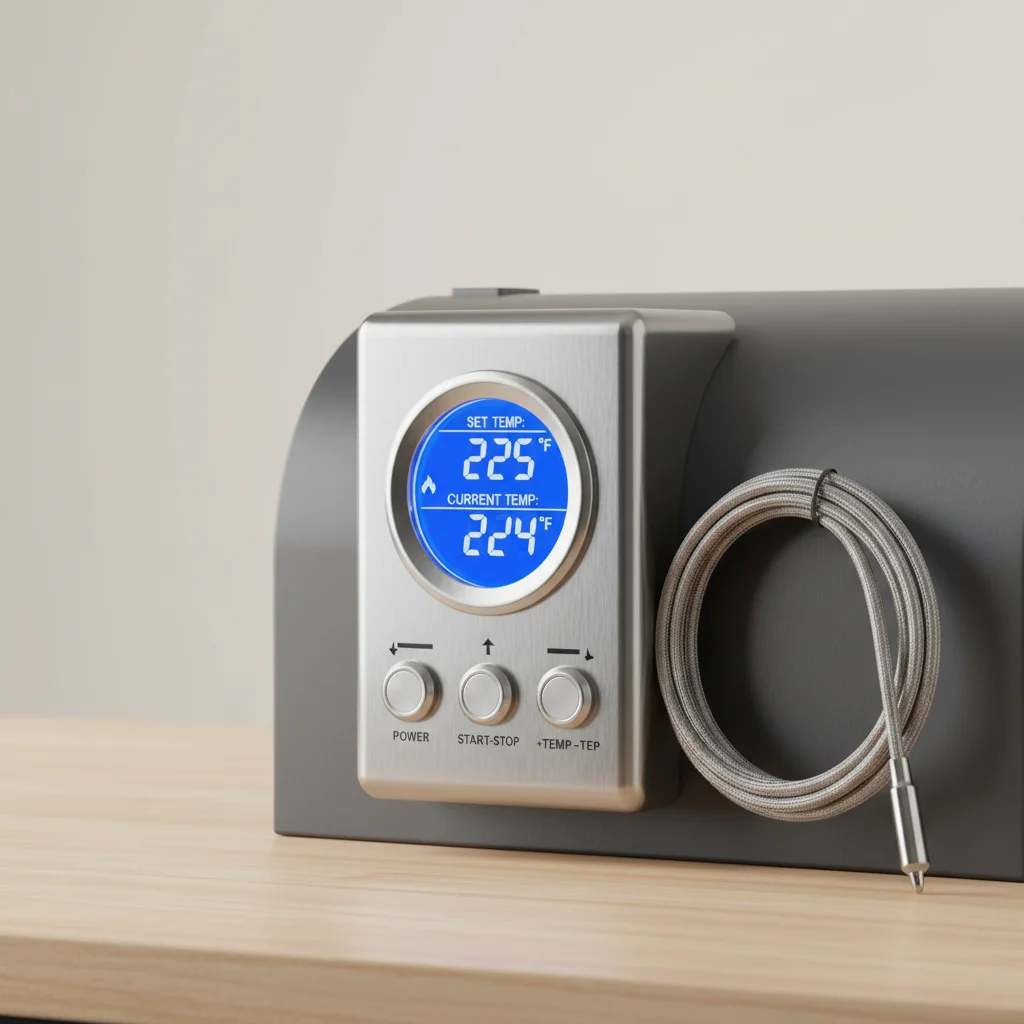
Maintaining steady heat in your pellet smoker is crucial for perfectly cooked food. The most effective way to achieve consistent temperatures is by understanding your smoker’s specific features, ensuring proper pellet flow, and minimizing lid openings. This guide will walk you through the essential steps to master temperature control, ensuring your BBQ results are consistently excellent.
Understanding Your Pellet Smoker’s PID Controller
Most modern pellet smokers are equipped with a Proportional-Integral-Derivative (PID) controller, which is the brain behind its temperature regulation. This controller constantly monitors the internal temperature and adjusts the auger speed to feed more or fewer pellets into the fire pot, thereby increasing or decreasing heat. Familiarize yourself with your smoker’s specific PID settings and any available modes, such as ‘smoke’ for lower, more fluctuating temperatures to maximize smoke production, or ‘grill’ for higher, more stable temperatures. For explore our pellet smoker reviews on this site.
The Importance of Quality Wood Pellets
The type and quality of wood pellets you use significantly impact temperature stability. High-quality, consistent-sized pellets burn more uniformly, leading to fewer temperature swings. Avoid using old or damp pellets, as they can cause inconsistent burning, auger jams, and erratic temperature readings. Always store your pellets in a dry, airtight container to maintain their integrity. Different wood types also have varying BTU outputs, so sticking with a consistent brand and blend can help you predict performance.
Minimizing Lid Openings and Environmental Factors
|
Our Picks for the Best Pellet Smoker in 2026
As an Amazon Associate I earn from qualifying purchases.
|
||
| Num | Product | Action |
|---|---|---|
| 1 | BBQ Wood Pellet Grill Smoker with Foldable Cart, Meat Probe, 2 Tiers Cooking Area, Portable Grilling Stove for Outdoor Kitchen Cooking Smoke and Roast, RV Camping, Black GS343 |

|
| 2 | Advanced Smoke Tube for Pellet Smoker, Latest Upgrade Cold Smoker Generator for Gas Grilling, Portable Cordless Electric, Hot or Cold Smoking: Fit Any Grill or Smoke, Perfect Gifts for Men, Fathers |
|
| 3 | CLIVIA Indoor Pellet Smoker, Electric Vertical Smart Smoker, Countertop 2 Layers BBQ Grill 10L Smoker Oven for Meat, Sausage, Jerky, Beef, Adjustable 86-230°F |
|
| 4 | LAZYFOX Smoke Generator for Pellet, Portable Cordless Electric Outdoor Smoker Tube, Wood chips or mix, Hot or Cold Smoking Backyard BBQ, Fit Any Grill or Smoke (Black) |
|
| 5 | Masterbuilt® 30-inch Digital Electric Vertical BBQ Smoker with Side Wood Chip Loader, Chrome Racks and 710 Cooking Square Inches in Black, Model MB20071117 |
|
| 6 | Ninja Woodfire Outdoor Grill & Smoker, 6-in-1 Functionality, Grill, Smoke, Bake, Roast, Air Fry, Broil, Authentic Woodfire Flavors, Electric Heat, OG321 |
|
| 7 | Ninja | Grill & Smoker | Outdoor Woodfire Pro XL | 4 in 1 Grill, BBQ Smoker, Air Fryer & Bake | Portable | Includes Built in Thermometer & 2 Woodfire Pellet Packs | Dark Grey | OG850 |
|
| 8 | Ninja OG751 Woodfire Pro Outdoor Grill Built-In Thermometer,7-in-1 Master Grill,BBQ Smoker,& Outdoor Air Fryer Plus Bake,Roast,Dehydrate & Broil,Woodfire Technology,Weather-Resistant,Grey XL |
|
| 9 | Masterbuilt® Slow and Cold Smoker Accessory Attachment With Removable Ash Tray for Masterbuilt Vertical BBQ Smokers in Black, 10" x 10" x 18", Model MB20100112 |
|
| 10 | 2026 Portable Electric Smoke Generator, Adjustable Smoke Control & Fits 99% Pellet Smokers & Grills, Cold/Hot Smoking Modes for Meats, Salmon & Cheeses – Great Gift Idea for Smoke Lovers |
|
Every time you open the lid of your pellet smoker, you release a significant amount of heat, causing the internal temperature to drop and the PID controller to work harder to recover. Aim to open the lid as infrequently as possible, and when you do, be quick and decisive. Environmental factors like wind and ambient temperature also play a role. Position your smoker in a sheltered spot to reduce wind interference, and consider using an insulated blanket during colder months to help maintain internal heat more efficiently.
Regular Cleaning and Maintenance for Optimal Performance
A clean pellet smoker is a happy pellet smoker. Ash buildup in the fire pot can restrict airflow, leading to incomplete combustion and temperature fluctuations. Regularly clean out the fire pot and vacuum the main cooking chamber. Ensure the temperature probe is clean and free of grease buildup, as a dirty probe can provide inaccurate readings to the PID controller, leading to poor temperature management. A well-maintained smoker will always perform better and hold temperatures more consistently.
- Clean the fire pot before each long cook.
- Wipe down the temperature probe regularly.
- Inspect the auger for any obstructions.
- Ensure the exhaust vent is clear.
- Check for any air leaks around the lid or door seals.
Preheating and Monitoring Your Cook
Always preheat your pellet smoker to the desired temperature and allow it to stabilize for at least 15-20 minutes before placing your food inside. This ensures the entire cooking chamber is at the target temperature, not just the air around the probe. Use a reliable external thermometer to cross-reference your smoker’s internal probe, especially if you suspect inaccuracies. For long cooks, consider using a leave-in probe thermometer for your meat, which can also help you monitor the ambient temperature near your food without opening the lid.
