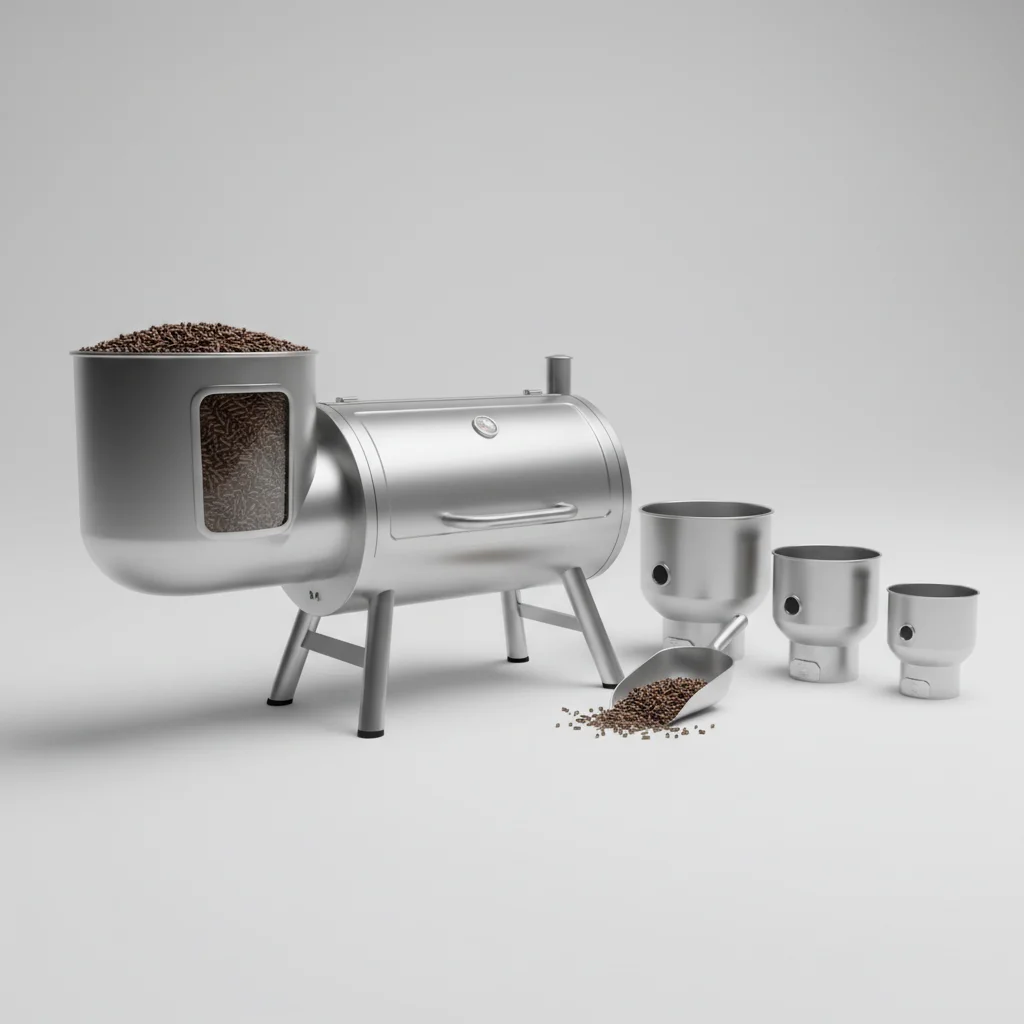
Understanding pellet smoker hopper capacity is crucial for uninterrupted smoking sessions. Most home pellet smokers feature hoppers ranging from 10 to 22 pounds, which typically provides 8 to 15 hours of continuous smoking, depending on the temperature and ambient conditions. For longer cooks, larger capacities are beneficial, while smaller hoppers are suitable for quick meals or portable units.
Factors Influencing Hopper Size Choice
Several factors should guide your decision on pellet smoker hopper capacity. The duration of your typical smoking sessions is paramount; if you frequently smoke briskets or pork butts for 12+ hours, a larger hopper (18-22 lbs) will prevent the need for mid-cook refills. Conversely, if you primarily use your smoker for shorter cooks like chicken or ribs, a 10-15 lb hopper might be perfectly adequate.
Another consideration is the type of food you prepare. High-temperature searing or grilling consumes pellets at a much faster rate than low-and-slow smoking. Therefore, even for shorter cooks, if you’re frequently operating at higher temperatures, a more generous hopper capacity can be advantageous.
Common Hopper Sizes and Their Uses
Pellet smoker hoppers come in a variety of sizes, each suited for different cooking styles and needs. Small hoppers, typically 5-10 pounds, are often found on portable or entry-level models. These are ideal for tailgating, camping, or small family meals that don’t exceed a few hours. They are lightweight and contribute to the overall portability of the unit.
Medium hoppers, ranging from 12-18 pounds, represent the sweet spot for many home users. This capacity allows for most overnight cooks without intervention and is versatile enough for both short and medium-duration smoking. It strikes a good balance between size and convenience for everyday use.
Large hoppers, 20 pounds and above, are designed for serious pitmasters and those who frequently host large gatherings. These capacities can easily handle all-day or multi-day smokes, ensuring you won’t run out of fuel during critical cooking phases. They are typically found on larger, more robust pellet smoker models.
Maximizing Pellet Efficiency and Storage
|
Our Picks for the Best Pellet Smoker in 2026
As an Amazon Associate I earn from qualifying purchases.
|
||
| Num | Product | Action |
|---|---|---|
| 1 | Ninja OG751 Woodfire Pro Outdoor Grill Built-In Thermometer,7-in-1 Master Grill,BBQ Smoker,& Outdoor Air Fryer Plus Bake,Roast,Dehydrate & Broil,Woodfire Technology,Weather-Resistant,Grey XL |

|
| 2 | Ninja | Grill & Smoker | Outdoor Woodfire Pro XL | 4 in 1 Grill, BBQ Smoker, Air Fryer & Bake | Portable | Includes Built in Thermometer & 2 Woodfire Pellet Packs | Dark Grey | OG850 |
|
| 3 | Masterbuilt® Slow and Cold Smoker Accessory Attachment With Removable Ash Tray for Masterbuilt Vertical BBQ Smokers in Black, 10" x 10" x 18", Model MB20100112 |
|
| 4 | Masterbuilt® 30-inch Digital Electric Vertical BBQ Smoker with Side Wood Chip Loader, Chrome Racks and 710 Cooking Square Inches in Black, Model MB20071117 |
|
| 5 | Advanced Smoke Tube for Pellet Smoker, Latest Upgrade Cold Smoker Generator for Gas Grilling, Portable Cordless Electric, Hot or Cold Smoking: Fit Any Grill or Smoke, Perfect Gifts for Men, Fathers |
|
| 6 | CLIVIA Indoor Pellet Smoker, Electric Vertical Smart Smoker, Countertop 2 Layers BBQ Grill 10L Smoker Oven for Meat, Sausage, Jerky, Beef, Adjustable 86-230°F |
|
| 7 | 2026 Portable Electric Smoke Generator, Adjustable Smoke Control & Fits 99% Pellet Smokers & Grills, Cold/Hot Smoking Modes for Meats, Salmon & Cheeses – Great Gift Idea for Smoke Lovers |
|
| 8 | LAZYFOX Smoke Generator for Pellet, Portable Cordless Electric Outdoor Smoker Tube, Wood chips or mix, Hot or Cold Smoking Backyard BBQ, Fit Any Grill or Smoke (Black) |
|
| 9 | Ninja Woodfire Outdoor Grill & Smoker, 6-in-1 Functionality, Grill, Smoke, Bake, Roast, Air Fry, Broil, Authentic Woodfire Flavors, Electric Heat, OG321 |
|
| 10 | BBQ Wood Pellet Grill Smoker with Foldable Cart, Meat Probe, 2 Tiers Cooking Area, Portable Grilling Stove for Outdoor Kitchen Cooking Smoke and Roast, RV Camping, Black GS343 |
|
Regardless of your hopper size, efficient pellet usage and proper storage are key to a successful smoking experience. Always store your wood pellets in a cool, dry place, preferably in airtight containers, to prevent moisture absorption. Damp pellets can lead to inefficient burning, temperature fluctuations, and even auger jams.
- Store pellets in airtight containers away from humidity.
- Avoid overfilling the hopper beyond its recommended capacity.
- Regularly clean out old pellets to prevent dust buildup.
- Consider a hopper extension for extremely long smoking sessions.
- Monitor pellet levels frequently during extended cooks.
For those with smaller hoppers who occasionally need extended cooking times, some manufacturers offer hopper extensions or aftermarket solutions. These can temporarily increase your pellet capacity, providing flexibility without committing to a larger, more expensive smoker.
When to Consider a Larger Hopper
You should consider upgrading to a pellet smoker with a larger hopper if you consistently find yourself refilling your current hopper mid-cook, especially during overnight smokes. This is a common frustration for those attempting long-duration recipes like whole briskets or multiple pork shoulders. A larger hopper eliminates this inconvenience, allowing for truly set-it-and-forget-it smoking.
Another indicator is if you frequently cook for large groups or participate in BBQ competitions. These scenarios often demand continuous operation for many hours, and a substantial pellet supply is non-negotiable. Investing in a smoker with a generous hopper capacity will significantly enhance your cooking efficiency and reduce stress during these events.

I used to constantly worry about running out of pellets during my overnight brisket smokes. Upgrading to a smoker with an 18-pound hopper has been a game-changer. Now I can set it and forget it for those long 12+ hour cooks without having to sneak outside in the middle of the night to refill. It’s made my BBQ weekends so much more relaxing.
I got a portable unit for tailgating, and while the small 10-pound hopper is convenient for transport, it’s a bit of a pain for anything over 6-7 hours. I had to refill it twice during a recent pulled pork cook, which interrupted the smoke a bit. It’s good for short cooks, but definitely not for those all-day sessions.
My new pellet grill has a 22-pound hopper, and I absolutely love it. I can smoke a huge pork butt or even multiple racks of ribs without ever thinking about refilling. The peace of mind knowing I won’t run out of fuel during a critical part of the cook is worth every penny. It really does allow for those uninterrupted smoking sessions.
For quick weeknight meals like chicken thighs or a rack of ribs, my 12-pound hopper is totally fine. I usually get about 10 hours out of it on a medium smoke, which is more than enough. The only reason I didn’t give it five stars is that I sometimes wish I had a slightly bigger one for when I do a bigger holiday turkey, but for everyday use, it’s perfect.