Few things are as frustrating for a backyard chef as a pellet smoker that refuses to ignite when you’re ready to cook. You’ve prepped your ingredients, the anticipation for smoky perfection is building, and then… nothing. But before you call for professional help or consider a new grill, many common ignition issues can be quickly diagnosed and fixed with a bit of DIY know-how. This comprehensive guide will walk you through the most frequent culprits behind a non-igniting pellet smoker and provide step-by-step solutions to get your grill firing up reliably every time.
What is a Pellet Smoker and Why Choose One?
A pellet smoker is a versatile outdoor cooking appliance that uses compressed hardwood pellets as fuel. These grills operate by feeding pellets from a hopper into a firepot via an auger, where an igniter rod sparks the pellets into flame. A fan then stokes the fire and circulates heat and smoke throughout the cooking chamber, providing precise temperature control and infusing food with delicious wood-fired flavor. Unlike traditional charcoal or gas grills, pellet smokers offer the “set it and forget it” convenience of an oven combined with the authentic taste of wood smoke, making them a favorite for smoking, grilling, baking, roasting, and braising a wide array of foods.
Common Reasons Your Pellet Smoker Fails to Ignite
Understanding the core components of your pellet smoker’s ignition system is key to troubleshooting. When your grill fails to light, it usually points to an issue with one of these critical elements.
Pellet-Related Issues: The fuel itself can be a primary cause of ignition failure.
- Low or Empty Hopper/Firepot: The most obvious, yet often overlooked, problem is simply not having enough pellets in the hopper or, more specifically, in the firepot where ignition occurs.
- Damp or Low-Quality Pellets: Pellets are highly absorbent. Moisture exposure can cause them to swell, crumble, or turn to sawdust, preventing proper feeding and ignition. Low-quality pellets may also burn inconsistently or contain excessive dust.
- Incorrect Pellet Type: Using heating fuel pellets or non-BBQ grade pellets can lead to poor ignition, inconsistent burns, and even damage to your grill due to different composition and ash content.
Igniter (Hot Rod) Problems: The igniter is what literally sparks the fire.
- Dirty or Ash Buildup: Over time, ash and creosote can accumulate around the igniter rod in the firepot, insulating it and preventing it from adequately heating the pellets.
- Damaged or Faulty Igniter Rod: If the igniter rod itself is bent, corroded, or has reached the end of its lifespan, it may not get hot enough to ignite the pellets.
- Loose or Disconnected Wiring: The igniter needs a reliable electrical connection to heat up. Loose wires to the igniter or the control board can interrupt this power flow.
Auger Malfunctions: The auger is responsible for transporting pellets to the firepot.
- Auger Jam: Wet pellets, oversized pellets, or foreign debris can jam the auger, preventing it from turning and delivering fuel.
- Auger Motor Not Turning: A faulty auger motor, a disconnected auger pin (on some models), or an electrical issue can stop the auger from rotating.
- Pellets Not Feeding: Even if the auger is turning, if it’s not effectively moving pellets into the firepot, ignition won’t occur.
Fan (Induction/Blower) Issues: Airflow is crucial for combustion.
- Fan Not Spinning: The induction fan, which supplies oxygen to the firepot, can get blocked by debris, jammed by grime, or fail due to a bad motor or electrical connection.
- Insufficient Airflow: Without a consistent supply of oxygen, the pellets won’t ignite or will quickly die out.
Power Supply and Electrical Concerns: The entire system relies on steady power.
- Loose Power Cord/Faulty Outlet: A simple loose plug, a tripped GFCI outlet, or a dead extension cord can prevent the grill from receiving power.
- Blown Fuse: Many pellet grills have fuses on the control board that can blow due to power surges, protecting more expensive components.
- Faulty Control Board: Less common, but a malfunctioning control board can fail to send power to the igniter, auger, or fan.
Firepot/Airflow Blockage:
- Excessive Ash Buildup: A thick layer of ash in the firepot can smother the igniter and pellets, preventing ignition and proper airflow.
- Blocked Exhaust or Flue: Obstructed exhaust vents can hinder proper airflow and smoke circulation, impacting ignition.
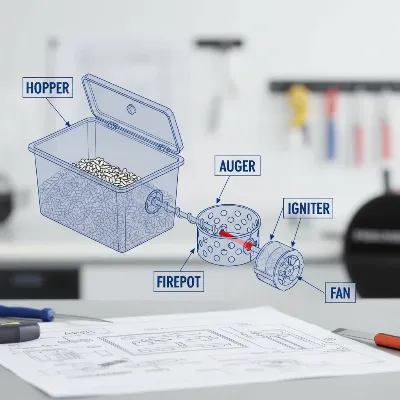 An exploded view of a pellet smoker showing key components like hopper, auger, igniter, fan, and firepot for troubleshooting ignition issues
Step-by-Step Troubleshooting for Ignition Failure
When your pellet smoker doesn’t ignite, systematically checking each potential issue will help you pinpoint the problem quickly. Always unplug your grill before performing any internal inspections or repairs.
1. Verify Power and Connections
|
Our Picks for the Best Pellet Smoker in 2026
As an Amazon Associate I earn from qualifying purchases.
|
||
| Num | Product | Action |
|---|---|---|
| 1 | BBQ Wood Pellet Grill Smoker with Foldable Cart, Meat Probe, 2 Tiers Cooking Area, Portable Grilling Stove for Outdoor Kitchen Cooking Smoke and Roast, RV Camping, Black GS343 |

|
| 2 | LAZYFOX Smoke Generator for Pellet, Portable Cordless Electric Outdoor Smoker Tube, Wood chips or mix, Hot or Cold Smoking Backyard BBQ, Fit Any Grill or Smoke (Black) |
|
| 3 | Advanced Smoke Tube for Pellet Smoker, Latest Upgrade Cold Smoker Generator for Gas Grilling, Portable Cordless Electric, Hot or Cold Smoking: Fit Any Grill or Smoke, Perfect Gifts for Men, Fathers |
|
| 4 | Masterbuilt® Slow and Cold Smoker Accessory Attachment With Removable Ash Tray for Masterbuilt Vertical BBQ Smokers in Black, 10" x 10" x 18", Model MB20100112 |
|
| 5 | Ninja OG751 Woodfire Pro Outdoor Grill Built-In Thermometer,7-in-1 Master Grill,BBQ Smoker,& Outdoor Air Fryer Plus Bake,Roast,Dehydrate & Broil,Woodfire Technology,Weather-Resistant,Grey XL |
|
| 6 | 2026 Portable Electric Smoke Generator, Adjustable Smoke Control & Fits 99% Pellet Smokers & Grills, Cold/Hot Smoking Modes for Meats, Salmon & Cheeses – Great Gift Idea for Smoke Lovers |
|
| 7 | Masterbuilt® 30-inch Digital Electric Vertical BBQ Smoker with Side Wood Chip Loader, Chrome Racks and 710 Cooking Square Inches in Black, Model MB20071117 |
|
| 8 | Ninja | Grill & Smoker | Outdoor Woodfire Pro XL | 4 in 1 Grill, BBQ Smoker, Air Fryer & Bake | Portable | Includes Built in Thermometer & 2 Woodfire Pellet Packs | Dark Grey | OG850 |
|
| 9 | Ninja Woodfire Outdoor Grill & Smoker, 6-in-1 Functionality, Grill, Smoke, Bake, Roast, Air Fry, Broil, Authentic Woodfire Flavors, Electric Heat, OG321 |
|
| 10 | CLIVIA Indoor Pellet Smoker, Electric Vertical Smart Smoker, Countertop 2 Layers BBQ Grill 10L Smoker Oven for Meat, Sausage, Jerky, Beef, Adjustable 86-230°F |
|
This is the foundational step. Without power, nothing else will work.
- Check the Outlet: Plug another appliance (like a hairdryer or shop light) into the outlet your grill is using to confirm it’s live. If not, check your home’s circuit breaker or reset the GFCI outlet.
- Inspect the Power Cord: Ensure the grill’s power cord is securely plugged into both the grill and the outlet. Look for any visible damage, cuts, or frayed wires on the cord.
- Extension Cords: If using an extension cord, make sure it’s rated for outdoor use and heavy-duty enough to handle your grill’s wattage. Faulty or inadequate extension cords are a common culprit.
- Check Fuses: Some pellet grills have an accessible fuse on the control panel or near the power input. Consult your owner’s manual to locate and inspect it. If blown, replace it with one of the identical rating.
2. Inspect Your Pellets
The quality and presence of your fuel are paramount for ignition.
- Hopper Level: Ensure your hopper has a sufficient amount of pellets. Don’t let it run completely dry during a cook or startup.
- Pellet Quality and Dryness: Remove a handful of pellets and inspect them.
- Good pellets should have a slight sheen and “snap” when broken.
- Bad pellets will look dull, crumble easily, or appear swollen if exposed to moisture.
- Clear the Auger Tube: If pellets are damp, they can clump up in the auger tube. Remove any old or suspect pellets from the hopper and auger. Refill with a fresh, dry bag. Store your pellets in an airtight container in a dry environment to prevent moisture absorption.
3. Clean the Firepot
Ash buildup is a silent killer of ignition.
- Remove Components: Disconnect the power, then remove the grill grates, drip tray, and heat baffle to access the firepot.
- Vacuum Ash: Use a shop vac to thoroughly clean out all ash and unburnt pellets from the firepot and the surrounding area. A clean firepot ensures the igniter can reach the pellets and allows proper airflow for combustion.
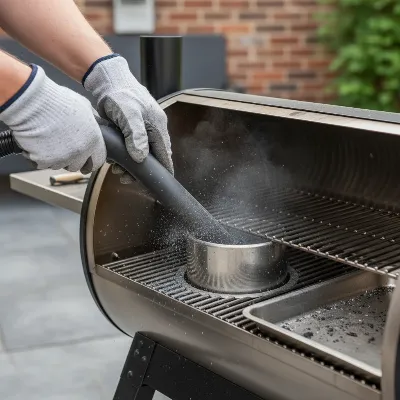 A person carefully vacuuming ash and debris from the firepot of a pellet smoker with a shop vac, highlighting clean maintenance for proper ignition
4. Check the Igniter Rod
This component is directly responsible for sparking the fire.
- Visual Inspection: After cleaning the firepot and ensuring the grill is unplugged, visually check the igniter rod for any physical damage or excessive carbon buildup that scrubbing can’t remove.
- Heat Test (Caution!): With the grill components (grates, drip tray, heat baffle) removed and the firepot clean, plug the grill back in and set it to a low temperature like “Smoke.” Carefully hover your hand a few inches above the igniter rod (DO NOT TOUCH IT). After 3-5 minutes, you should feel heat radiating from it, or see it glow faintly red.
- If you feel heat, the igniter is likely working, and the problem lies elsewhere.
- If there’s no heat, the igniter itself might be faulty or its wiring disconnected. Unplug the grill immediately.
- Wiring Check: Access the controller (usually by removing a panel near the hopper) and check the igniter’s electrical connections. Disconnect and firmly reconnect any purple and white (or similarly colored, refer to your manual) wires leading to the igniter to ensure a solid connection. If the igniter still doesn’t heat up, it likely needs replacement.
5. Evaluate the Auger System
The auger is the fuel delivery system.
- Observe Auger Rotation: With the internal components removed and the grill set to “Smoke,” observe the auger in the firepot. It should turn intermittently (e.g., 15 seconds on, 1 minute off, depending on the model) and slowly feed pellets into the firepot.
- If the auger isn’t turning, unplug the grill.
- Check for Jams: Look down into the hopper and auger tube for any visible pellet jams or foreign objects. If you find one, carefully remove it. You may need to remove the bottom panel of the hopper to access the auger motor and clear stubborn jams. Some manufacturers recommend turning the controller knob between ‘Shut Down Cycle’ and ‘Smoke’ repeatedly to help dislodge minor jams.
- Auger Motor Fan: On many models, the auger motor has a small fan attached to its rear. When the grill is on and set to temperature, check if this fan is spinning. If it’s not, the motor may be faulty or not receiving power.
- Wiring Connections: Inspect the wiring to the auger motor. Disconnect and reconnect to ensure a secure connection. If the motor still doesn’t turn, it might need replacement.
6. Examine the Induction Fan
Proper airflow is essential for a robust flame.
- Listen and Feel: When the grill is powered on and set to a temperature, listen for the sound of the induction fan running and feel for air blowing into the firepot.
- Visual Inspection: Access the induction fan (usually located beneath the hopper). Check for any obstructions like wires, dust, or debris blocking the fan blades.
- Manual Spin: If the fan isn’t spinning, gently try to spin it manually with your hand (with the grill unplugged). Sometimes, a bit of grime can seize the blades. Compressed air can help remove dust.
- Wiring Check: Like the igniter and auger, check the electrical connections to the induction fan. Loose or faulty wiring can prevent it from operating. If the fan still doesn’t work after clearing obstructions and checking connections, the fan motor might be defective.
7. Follow Proper Startup Procedure
Many grills have a specific startup sequence.
- Closed Lid: Most pellet grills require a closed-lid startup to allow the temperature to build correctly in the firepot for ignition. Consult your owner’s manual for the exact procedure for your model. Skipping steps or opening the lid too early can disrupt the ignition process.
When to Replace Parts (and How to DIY)
If troubleshooting points to a specific component failure, replacing it yourself can save time and money. Always order replacement parts specifically for your grill’s make and model.
Replacing the Igniter Rod
- Safety First: Always unplug the grill.
- Access: Remove grates, drip tray, and heat baffle. You’ll need to remove the firepot (usually held by a few screws and then a quarter turn).
- Remove Old Igniter: Loosen the set screw holding the igniter in place in the burn tube. From underneath the hopper, you’ll typically need to unclip zip ties and disconnect the igniter’s wiring harness (often purple and white wires) from the control board. Carefully pull the old igniter rod out.
- Install New Igniter: Feed the new igniter wires back through the tube, connect the wiring harness, and secure the igniter into the firepot, ensuring about 1/4 to 1/2 inch of the tip is exposed in the firepot. Tighten the set screw. Reassemble the grill.
Addressing Auger Motor Issues
- Diagnosis: If the auger motor fan isn’t spinning, the auger isn’t turning, and you’ve ruled out jams and wiring issues, the motor is likely faulty.
- Replacement: Unplug the grill. Access the auger motor, usually located under the hopper. This often involves removing a bottom panel. Disconnect the wiring, unbolt the old motor, and install the new one, reversing the steps. Ensure the auger pin (if present) is correctly seated.
Dealing with Fan Replacement
- Diagnosis: If the fan isn’t spinning, is noisy, and you’ve checked for obstructions and wiring, it might need replacement.
- Replacement: Unplug the grill. Access the induction fan, typically located at the bottom of the hopper assembly. Disconnect the wiring (often orange and white wires), unmount the old fan, and install the new one. Ensure all wires are clear of the blades before securing panels.
Maintenance Tips to Prevent Ignition Problems
Proactive maintenance is the best defense against ignition failures.
- Regular Cleaning: Clean out the firepot after every 2-3 cooks, or more frequently if you do long smokes. Vacuum the entire grill interior, especially around the igniter and fan, to prevent ash buildup.
- Proper Pellet Storage: Always store unused pellets in an airtight container (like a 5-gallon bucket with a gamma lid) in a cool, dry place. Never leave them exposed to humidity or rain.
- Use Quality Pellets: Stick to reputable brands of hardwood BBQ pellets. They are designed for consistent burning and lower ash content.
- Periodic Component Checks: Before longer cooks, quickly check the igniter for heat, listen for the auger and fan operation, and ensure the firepot is clear.
- Empty Hopper for Long Storage: If storing your grill for an extended period (weeks or months), empty the hopper to prevent pellets from absorbing moisture and jamming the auger.
> “A clean grill is a happy grill. Regular ash removal and proper pellet storage are the simplest ways to ensure a consistent and reliable ignition every time you fire up your smoker.” – Chef Elena Rodriguez, BBQ Pitmaster and Pellet Grill Expert
Conclusion
A non-igniting pellet smoker can bring your cooking plans to a halt, but with a methodical approach, most issues can be quickly identified and resolved with a little DIY effort. By understanding the roles of pellets, the igniter, auger, and fan, and performing routine maintenance, you can ensure your pellet grill fires up consistently, delivering delicious, smoky flavors every time. Don’t let a minor hiccup keep you from enjoying the convenience and culinary delights your pellet smoker offers.
Ready to troubleshoot your grill with confidence? What’s your go-to maintenance step for preventing pellet smoker ignition issues?
Frequently Asked Questions
Why does my pellet smoker only smoke, not ignite with a flame?
If your pellet smoker produces smoke but no sustained flame, it often indicates insufficient heat or airflow. The igniter might be dirty or weak, not getting hot enough to fully combust the pellets. Alternatively, the fan might not be providing enough oxygen, or the firepot could be overloaded with pellets or ash, suffocating the nascent flame.
Can I manually light my pellet smoker if the igniter fails?
Yes, you can manually light a pellet smoker in a pinch. After ensuring pellets are in the firepot and the fan is operating (set to “Smoke”), carefully add a small amount of fire starter gel or a crumpled paper towel/firelighter, then ignite with a long lighter or torch. Close the lid and monitor closely until pellets are burning steadily before setting your desired temperature.
How often should I clean my pellet smoker’s firepot?
For optimal performance and to prevent ignition issues, it’s recommended to clean out the firepot after every 2-3 cooks, especially if you’re doing long smoking sessions. Heavy ash buildup can easily smother the igniter and restrict crucial airflow, leading to failed ignitions.
What are common signs of bad pellets?
Bad pellets often appear dull, crumbly, or have excessive sawdust. If they have been exposed to moisture, they might swell and feel soft instead of snapping cleanly when broken. Using bad pellets can lead to auger jams, inconsistent temperatures, and most importantly, ignition failure due to poor combustion.
Is it safe to leave pellets in the hopper for extended periods?
It is generally not recommended to leave pellets in the hopper for extended periods, especially in humid environments. Pellets absorb moisture, which can lead to them swelling and jamming the auger. This can also degrade pellet quality, affecting ignition and smoke production for your next cook.
